

CONFERENCE MODERATOR
 Ambassador Hatem Atallah (Tunisia)
Coming from a rich diplomatic background that encompassed over 35 years, Ambassador Atallah was the Tunisian Ambassador in several countries including the US, the UK, South Africa and Ethiopia, He was also the Permanent Representative of Tunisia to the Organization of American States, the African Union, the Economic Commission for Africa, UNEP (United Nations Environment Programme), UN-Habitat, and the International Maritime Organization. He was appointed the Diplomatic Advisor to the Head of the Tunisian Government until February 2015. Ambassador Atallah participated in numerous summits, ministerial meetings and high level conferences of the African Union, the United Nations and the Union for the Mediterranean. From March 2015 to December 2017 he served as Executive Director of the Anna Lindh Foundation for Dialogue between Cultures in the Euro-Mediterranean Region. Ambassador Atallah serves as Vice Président of the Euro-Med University (EMUNI) in Slovenia and member of the Senate. He also serves on the Board of Governors of the Gorée Institute in Sénégal and is a founding member of « AVASP » (Institute for Strategic Analysis and Prospective Studies – Tunis).
EXPERTS and SPEAKERS
Panel “Regional Cooperation, Human-Centred Security, and Civil Society Engagement”
 Häli Allas, Deputy Head of the Internal Security Institute at the Estonian Academy of Security Sciences (Estonia)
Deputy Head of the Internal Security Institute, Estonian Academy of Security Sciences Ms Häli Allas serves as Deputy Head of the Internal Security Institute at the Estonian Academy of Security Sciences, focusing on postgraduate education, applied research and international cooperation. She has over 20 years of experience in internal security, rescue services and professional education. Ms Allas previously held leadership roles at the Estonian Ministry of the Interior, with responsibilities spanning sector-wide education, research, development and innovation. From 2019 to 2024, she was Director of the Academy’s Rescue College. Earlier in her career, she headed the Planning Division within the Rescue Work Department of the Estonian Rescue Services Agency, responsible for national rescue service development, operational analysis, and resource planning. Her international experience includes advising on rescue-service capacity building in Latvia and Albania and chairing expert panels evaluating higher education in internal security and civil protection. She also leads the preparation of Horizon Europe research proposals and coordinates the development of international research partnerships. Ms Allas graduated from the Estonian Academy of Security Sciences and holds a master’s degree in public administration from Tallinn University of Technology. She is currently pursuing doctoral studies at the University of Latvia, focusing on human-centred leadership and organisational resilience in internal security. She has three daughters and enjoys gardening and playing the violin.
 Ewa Puzdrowska, British Council Regional Lead Non-Formal Education, EU Region, Digital Citizens Euroopa programme manager (Poland)
 Tolulope Ayotunde Olalekan, Founder – Chair Africans Arise Organisation (Sweden)
Ms. Tolulope Olalekan is the Founder and Chair of Africans Arise, a Malmö-based, community-led movement founded in 2024 to empower Black-African communities across Sweden and the Nordic region and strengthen connections with wider society. With over 15 years of experience in civil society, community engagement, sustainable entrepreneurship, and stakeholder management, she promotes inclusion through intercultural dialogue, art-based methodologies, and youth mentorship initiatives such as Building Future Leaders. Her flagship initiative, Arise & Bloom: Pathways to Success, supports women of colour and women with foreign backgrounds in overcoming barriers to career development, entrepreneurship, and integration.
 Bet Gamell Rodríguez, Board Member of the Association of Human Rights Educators (Spain)
Bet Gamell Rodríguez is a Board Member of Association of Human Rights Educators (AHEAD), a Barcelona-based civil society organisation working on human rights education and intercultural dialogue. Her experiences abroad deepened her interest in international and European politics, and her commitment to migration and human rights led her to join AHEAD as an intern. Since then, she has remained involved in the organisation, contributing to the coordination and implementation of European projects such as CLAP (CERV) and Towards an Inclusive Europe, and representing AHEAD in local and European networks. In parallel, she works in communications and public affairs in local government. She holds a degree in Political Science and Public Management, specialising in International Relations, and has completed the coursework of the Master’s in Globalisation, Cooperation and Development at the University of Barcelona, where she is currently writing her thesis.

Mette Brogden, Ph.D., Professor of Practice, University of Arizona School of Global Studies/Human Rights Practice, University of Arizona (AZ, USA)
Dr. Brogden is a cultural and medical anthropologist who teaches graduate level courses on Migration Pathways (Central America to the U.S., and West Africa to Europe); Human Rights Crises and Trauma, CSOs & NGOs Advancing Human Rights. She holds a Ph.D. from University of Arizona. Mette`s research interests include international migration; trauma impacts and social healing from extreme violence and human rights violations; indigenous rights and cultural heritage protection; and rights of species and ecological systems. From 2003-2017 while serving in leadership positions in resettlement agencies, state and city governments in Tucson, Texas, Wisconsin, Baltimore and Seattle, she oversaw the resettlement and integration of over 13,000 refugees to the U.S. from various of African countries, Asian and Middel East countries, the former Yugoslavia, and the former Soviet Union. Prior to 2003 she served as a neutral mediator/ facilitator in environmental and public policy conflict resolution processes across local, state, and national levels at UA’s Udall Center for Studies in Public Policy.
Narcis George Matache, Chief Executice Officer, Aalborg Institute for Development (Denmark)
Panel “Societal Security and Resilience in the Nordic-Baltic and Arctic Region”
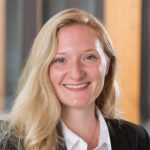 Julie Clark, Doctoral Researcher, Balsillie School of International Affairs, Fellow with the Canadian Global Affairs Institute/ NAADSN (Canada)
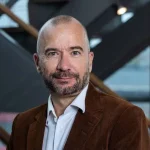 Flemming Splidsboel Hansen Senior Researcher, Danish Institute for International Studies (Denmark)
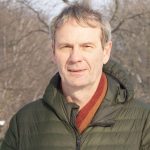
Thierry Rodon, Professor of Political Science at Université Laval in Quebec City (Canada)
 Linus Owman, Project Leader, Societal Security and Resilience, Nordic Council of Ministers (Denmark)
inus Owman is the Project Leader for the Nordic Council of Ministers’ initiative on Societal Security and Preparedness, which is set to develop into a dedicated programme in early 2027. The initiative aims to strengthen Nordic cooperation in societal security, crisis preparedness and resilience, fostering closer regional collaboration and creating added value across the Nordic countries. Linus brings extensive experience in strategic planning, public sector development, information security, societal resilience and international cooperation. Previously, he served as Head of Strategy and Business Development in a Swedish municipality and as a Senior Consultant at PwC, specialising in information security, societal security and preparedness. He also held the position of Global Core Team Knowledge Manager at PwC, where he supported strategy, coordination and knowledge management for the firm’s international Government and Public Services network, spanning approximately 120 countries. His work focuses on strengthening institutional capacity, cross-sector cooperation and strategic approaches to building safer and more resilient societies.
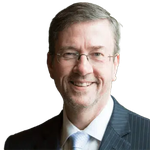 Dr. Daniel S. Hamilton, Senior Fellow, Foreign Policy Institute of Johns Hopkins University’s School of Advanced International Studies (USA)
Dr Daniel S. Hamilton is a Senior Fellow at the Foreign Policy Institute of Johns Hopkins University’s School of Advanced International Studies (SAIS) and a non-resident Senior Fellow at the Brookings Institution. His expertise includes transatlantic relations, European security, NATO, Nordic-Baltic cooperation and societal resilience. A former U.S. Deputy Assistant Secretary of State for European Affairs, he combines extensive diplomatic experience with academic research on international cooperation, crisis preparedness and emerging security challenges. He was the founding director of the SAIS Center for Transatlantic Relations and has led research on European affairs and preparedness for major crises. The author of more than 100 books and articles, he regularly contributes to parliamentary hearings and public debate on both sides of the Atlantic. His work has received honours from Germany, France, Poland and Sweden, recognising his contribution to international understanding and transatlantic cooperation.
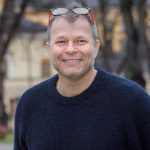 Teivo Teivainen, Professor of World Politics in University of Helsinki, Chair of Finnish National Commission for UNESCO (Finland)
Panel “Inclusive Governance and Institutional Participation in the Euro-Mediterranean Region”
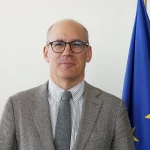 Francisco Gaztelu Mezquiriz — Director for North Africa, DG MENA, European Commission (Belgium)
Francisco Gaztelu Mezquiriz is Director of the North Africa Directorate within the European Commission’s Directorate-General for the Middle East, North Africa and the Gulf (DG MENA). He previously served as Director for the Southern Neighbourhood and Türkiye and as Head of the Migration Unit in the former Directorate-General for Neighbourhood and Enlargement Negotiations (DG NEAR). His extensive European Commission experience includes leading units responsible for irregular migration and return policy, the multiannual financial framework, budgeting and agencies. He has also served as Assistant to the Director-General for Asia Pacific, Deputy Head of Unit for the Middle East and Deputy Head of Cabinet to the Vice-President for the Internal Market, Defence and Space. With an academic background in engineering and microeconomics, he brings broad expertise in migration policy, neighbourhood relations and EU governance. His experience offers valuable institutional perspectives on Euro-Mediterranean cooperation, regional transformation and partnerships between Europe and its southern neighbours.
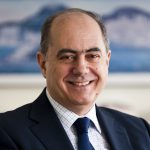 H.E. Ambassador Senén Florensa, Executive President, European Institute of the Mediterranean (Spain)’
Ambassador Senén Florensa is a Spanish diplomat and economist, Executive President of IEMed and Chair of the EuroMeSCo General Assembly. He previously served as Spain’s Ambassador to Tunisia, Permanent Representative to the United Nations and other international organisations in Vienna, and Consul General in Rome and Berlin. His expertise spans Euro-Mediterranean relations, democratic governance, regional cooperation and economic development. He brings extensive diplomatic and academic experience to advancing dialogue and partnerships between Europe and the Mediterranean.
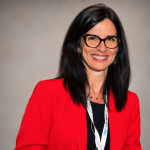 Anna Dorangricchia, Programme Manager, Human Development Division, Secretariat of the Union for the Mediterranean (Spain)
Ms Anna Dorangricchia serves as Programme Manager in the Human Development Division of the Secretariat of the Union for the Mediterranean (UfM), where she coordinates the UfM Regional Policy Dialogue on Women’s Empowerment. She leads regional initiatives promoting women’s economic empowerment, female entrepreneurship in the green and technology sectors, and the active participation of civil society organisations and youth-led initiatives. With over 20 years of experience in international cooperation, she has worked extensively on programmes and projects advancing the social and economic inclusion of women and young people. lHer work focuses on strengthening regional cooperation, fostering multistakeholder dialogue, and promoting inclusive and sustainable development across the Euro-Mediterranean region.
 Michael G. Kavuklis, Coordinator in Chief of the Europe, Entrepreneurship & Sustainable Development Forum of Rhodes (Greece)
Michael G. Kavuklis is a Political Scientist / International Relations (BA, MA) and owner of the marketing agency mgk.advertising, from Rhodes, Greece, specialised in branding, web development, content developement, local marketing, digital marketing and marketing in the sectors of tourism, SMEs, academia, culture and civil society. He is a certified alternative tourism consulant. He has a long experience and involvement in projects as youth and for youth, intercultural dialogue, active citizenship, European integration, sustainbable development and entrepreneurship. He currently serves as the President of the House of Europe in Rhodes, Founder and Head of the Organizing Committee of the “Rhodes Model Regional Co-operation” youth leadership conference, Founder and Head of the Organizing Committee of the Europe, Entrepreneurship & Sustainable Development Forum – EESD Forum Rhodes, Vice President of the European Network for Education and Training e.V. – EUNET and the Focal Point of the Greek Network of the Anna Lindh Foundation for Aegean and Crete.
 Annis Boufrikha, Head of Anna Lindh Foundation Tunisian Network / We love Sousse (Tunisia)
Anis Boufrikha from Tunisia, Sousse with a degree in international economics and then a master’s degree in entrepreneurship and another in creative entrepreneurship. He joined the African Development Bank in 2007 as a research assistant In charge of the bank’s database in NGOs in 2014, it launches its own development box through which it manages several projects and provides training related to socio-cultural development and governance as well as several other expertise related to project management and To associative governance In 2011 he created the association we love Sousse, once launched it multiplies the encounter and develops the idea of We love associations network which was officially created in February 2012 with the assistance of 10 Associations we love in 6 different countries In 2012 he was elected head of Tunisian network of Anna Lindh Foundation and he is currently coordinating several associations throughout Tunisia.
Panel “Interconnected Security Challenges in Europe and the Mediterranean: State and Civil Society Perspectives”
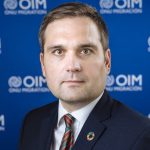 Kari Käsper, Head of Office for the International Organization for Migration (IOM) in Estonia
Mr. Kari Käsper assumed the position of Head of Office for the International Organization for Migration (IOM) in Estonia in November 2023. He has significant experience in European law, human rights, and migration management. Before joining IOM, Mr. Käsper worked at the UN High Commissioner for Refugees (UNHCR) Representation for the Nordic and Baltic countries in Stockholm. He has a strong academic background, having served as a Lecturer at Tallinn University of Technology, where he taught European Union law and human rights. In addition to his international and academic experience, Mr. Käsper is the founder and former head of the Estonian Human Rights Centre, where he contributed to advancing human rights protection and policy development at the national and European levels. He holds a Master’s degree in European Union, International and Comparative Law from Tallinn University of Technology.
 Stefanos Vallianatos , Co-Founder of Fotoessa, Head of Greek Network of Anna Lindh Foundation (Greece)
Stefanos Vallianatos holds a Ph.D. in International Politics (on Middle East Foreign Policy Making) from Lancaster University and and an MA on Western European Politics. Currently, he is heading the department of International Relations of the Hellenic Foundation for Culture, and is co-founder of the CSO Fotoessa (for Eductaion, Research & Action). He is also the coordinator of the Greek National Network of the Anna Lindh Foundation, has taught Middle East and Balkan Politics, participated in several conferences and gave lectures on Middle East Politics, on the state of Civil Society in the Euro-Med and the Middle East, on civic education and on intercultural dialogue and cities. He is a certified trainer on Creative and Social Entrepreneurship and has implemented projects educational, cultural and creative nature. His publications include volumes on International Relations in the Middle East, on the political system and evolution of Iran, on Arab Civil Society after the Arab Spring, the ALF and EUNIC: case studies of multi-lateral cultural diplomacy, Euro-Mediterranean Civil Society at a crossroad, and others.
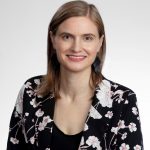 Saara Pellander, Director, Migration Institute of Finland (Finland)
Saara Pellander (Doctor of Social Sciences, Title of Docent/Associate Professor in Political History) is Director of the Migration Institute of Finland. She specializes in migration policies and their implementation, particularly in relation to transnational families, bordering processes, and media representations of (forced) migration. She is currently a work package leader in two research projects funded by the Strategic Research Council (SRC) within the Research Council of Finland: Mobile Futures: Diversity, Trust and Two-Way Integration and Transforming Immigration Systems for Future Skills (TRIM). She serves on the International Advisory Council of the Metropolis International Migration Network and on the Board of Directors of the IMISCOE network. She is the Editor-in-Chief of the Migration Institute’s publication series and its Migration-Muuttoliike journal.
Veiko Kommusaar, Deputy Director General of Estonian Police and Border Guard Board (Estonia)
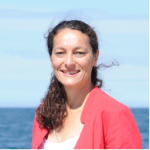 Sophie Beau, Co-founder and General Director, SOS Méditerranée (France)
Sophie Beau has been leading humanitarian and social programs for 30 years in France and abroad. She is a co-founder of the European rescue organization SOS MEDITERRANEE, which rescued more than 43,000 people in distress in the Mediterranean in 10 years. She founded the international network in 2015 and served as executive director of the French branch until October 2026. Previously, she had worked for Doctors Without Borders and Doctors of the World in numerous crisis zones in Africa, the Middle East, and the Caucasus, as well as at the headquarters of these NGOs in France, the Netherlands, and the United States. She holds a Master’s degree in anthropology, a postgraduate degree in political science, and a university diploma in health and social vulnerability.
 Dr Mahmoud Ezzat – Director of the Center for Strategic Studies, Bibliotheca Alexandrina (Egypt)
Dr Mahmoud Ezzat is an Egyptian political scientist, researcher and writer whose work spans politics, history, culture and media. He holds a PhD in Political Science, awarded in 2017, and a master’s degree in Political Science from Cairo University, awarded in 2013. At Bibliotheca Alexandrina, his work has included cultural exchange and the development of partnerships with institutions and civil society organisations at local, regional and international levels. He has also been responsible for the Memory of Modern Egypt digital portal and other documentation websites, connecting historical research, cultural heritage and public access to knowledge. His expertise includes intercultural dialogue, media literacy, countering extremism and Euro-Mediterranean cooperation. Since 2011, he has contributed to Anna Lindh Foundation-supported projects and initiatives promoting coexistence and cross-cultural understanding. An award-winning author with publications in Egypt and internationally, Dr Ezzat received Egypt’s State Incentive Award in Social Sciences in the media and press category in 2013. His experience brings academic and practical perspectives to the role of media, education and youth participation in addressing hate speech and strengthening dialogue across communities.
 Yassine Isbouia, expert in Youth and Civil Society issues in FOMEJE (Morocco)
Yassine Isbouia is a visiting professor at the Faculty of Education Sciences, Mohammed V University in Rabat, as well as a researcher and international expert in youth and civil society issues. He is pursuing a Ph.D. at the Laboratory of Educational Policies and Social Dynamics at the same university. Yassine holds a specialized Master’s degree in Education and Animation from the Royal Institute for Youth and Sports. With over 20 years of experience in youth development in Morocco and internationally, Yassine serves as the General Coordinator of the Mediterranean Forum for Youth (FOMEJE) and the National Coordinator of the “No Hate Speech” Movement. Previously, he held the position of Director of the National Institute for Youth and Democracy under the Ministry of Youth and Sports. Yassine is actively engaged in addressing climate change and digital transformation challenges, integrating these pressing global issues into his work on youth empowerment and civil society. As an internationally accredited trainer by the Council of Europe and SALTO-Youth Euro-Med, Yassine has organized numerous national and international training sessions and conferences in collaboration with government sectors and international organizations.
Panel “Ukraine, Moldova and the Future of European Security and Democracy”
 Dr. Nikolay Tsvyatkov, Senior Researcher at Moldova State University
Tsvyatkov is a Senior Researcher at Moldova State University. He has four years of experience in the IT sector as a data analyst. Previously, he held several positions in public service, including Deputy Chief at the State Chancellery’s Bureau for Reintegration Policies, where he was responsible for managing analytical work and planning the country’s long-term strategy for resolving the Transnistrian conflict, and Senior Consultant at the Office of the President of the Republic of Moldova. In 2019, he defended his doctoral dissertation (Doctor habilitat) on civil society in the Republic of Moldova. He is the author of several books and scientific articles published in different European countries and US.
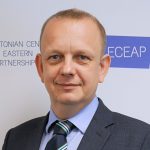 Gert Antsu – Director for Ukraine, Moldova & the South Caucasus, Ministry of Foreign Affairs of Estonia
Gert Antsu is a seasoned Estonian diplomat currently overseeing relations with Ukraine, Moldova and the South Caucasus at the Estonian Ministry of Foreign Affairs. He served as Estonia’s Ambassador to Ukraine (2016‑2019) and previously to Belgium, Luxembourg and Switzerland (2012‑2016), bringing years of experience in EU affairs, Eastern partnership policy and international cooperation. A graduate of the University of Tartu and the College of Europe, he has played a key role in Estonia’s foreign policy and integration efforts. He continues to focus on reform, security and regional partnerships in Europe’s eastern neighbourhood.
 Victor Guzun, digital policies expert, Institute for European Policies and Reforms (Moldova)
Victor Guzun is a digital policy expert at the Institute for European Policies and Reforms (IPRE) in Moldova, a board member of the EDGE Institute (Romania), and the head of an international consulting company based in Estonia. He is passionate about digital transformation and public adminsitration reform and serves as a consultant in various specialized projects aimed at supporting governments, the business sector, and local communities. Victor has previously worked as a teacher and university lecturer, a public official in the field of international relations, and served as the Ambassador of the Republic of Moldova to Estonia.
 Viktoriia Voronina, Executive Director of the Center for Security Studies “CENSS” (Ukraine) Online
Viktoriia Voronina is an expert in security policy, public administration, peacebuilding and community resilience. She has led CENSS since 2019, overseeing initiatives on social cohesion, countering hybrid threats, arms control and reintegration. She previously served as Ukraine’s Deputy Minister for Temporarily Occupied Territories and Internally Displaced Persons and, in 2023–2024, as an adviser to the Minister of Veterans Affairs. Her experience includes developing government strategies on recovery, conflict prevention and reintegration, coordinating international cooperation, and supporting communities affected by armed conflict. She has worked with international organisations, including the OSCE and UNDP, and lectures in public administration at Kyiv Polytechnic Institute. Her work brings practical Ukrainian perspectives on human-centred security, inclusive recovery and cooperation between public institutions and civil society.
 Tetiana Fedosiuk, Researcher and Publications Manager at the International Centre for Defence and Security (Estonia/Ukraine)
Tetiana Fedosiuk is a Researcher and Publications Manager at the International Centre for Defence and Security (ICDS/RKK) in Tallinn, where she also edits the foreign-policy journal Diplomaatia. Her work covers hybrid and cognitive warfare, foreign information manipulation and interference. She is the author of the forthcoming ICDS study On Prisoners of War and More: Institutional Design and Operational Reality (2026) and a member of the REDEMOS Horizon Europe consortium. She frequently comments on these topics for Estonian and international media, writes a regular column on Ukrainian society and resilience during the war for the Estonian daily Postimees, and holds a degree (with honours) in translation, interpreting, and linguistics from Odesa I. I. Mechnikov National University.
 Tetiana Klaban, Founder and Chair, Stowarzyszenie “Kobiety Tworzą Zmiany” Women Create Change, (Poland)
Tetiana Klaban is the founder and chair of Stowarzyszenie Kobiety Tworzą Zmiany (Women Create Change) and a project specialist at the Czas Przestrzeń Tożsamość Association in Szczecin, Poland. She has coordinated three projects supporting approximately 100 people displaced by Russia’s war against Ukraine. Since the beginning of the full-scale invasion in 2022, she has also supported hundreds of Ukrainians through volunteer initiatives. As a safety and first aid trainer, she helps local communities strengthen their emergency preparedness and crisis resilience. Tetiana co-authored a regional report on non-EU migrants in West Pomerania as part of the MILEstone project (Interreg Europe) and actively participates in national conferences and forums focusing on migration and integration. Originally from Ukraine, she has lived in Poland since 2014 and became a Polish citizen in 2023. Her work brings a valuable grassroots perspective on civil society engagement, community trust, social inclusion and resilience in times of crisis.
 Margit Säre – Chairwoman & Project Manager, Peipsi Center for Transboundary Cooperation (Estonia)
Margit Säre leads the Peipsi Center for Transboundary Cooperation, driving efforts in sustainable development, cross-border collaboration, and environmental education in the Lake Peipsi region. With strong academic credentials in social work, European integration, and minority rights, she has overseen influential projects such as GreenMind, SAME World, and heritage education initiatives. Under her guidance, Peipsi CTC actively promotes civil society engagement, transboundary water management, and ecological awareness.
Panel “Bridging Perspectives: Media Warfare, Resilience and Civil Society in a Changing Security Landscape”
 Maia Klaassen, Junior Research Fellow in Media Literacy, Institute of Social Studies, University of Tartu, Coordinator of Baltic EDMO hub BECID
Maia is a Junior Research Fellow in Media Literacy at the Institute of Social Studies at the University of Tartu. She coordinates the Baltic Engagement Center for Combatting Information Disorders (BECID; one of 15 hubs combatting disinformation in the pan-European EDMO network) and the programme manager for the interdisciplinary 1-year MA degree Disinformation and Societal Resilience. In addition to teaching information disorder-related subjects at the university level, she also shares knowledge through non-formal and informal learning, leaning on more than 10 years of experience from nongovernmental and youth organisations. Her practitioner background and academic networks have equipped her with a bird-eye view of the information security ecosystem and civil society’s role in it.
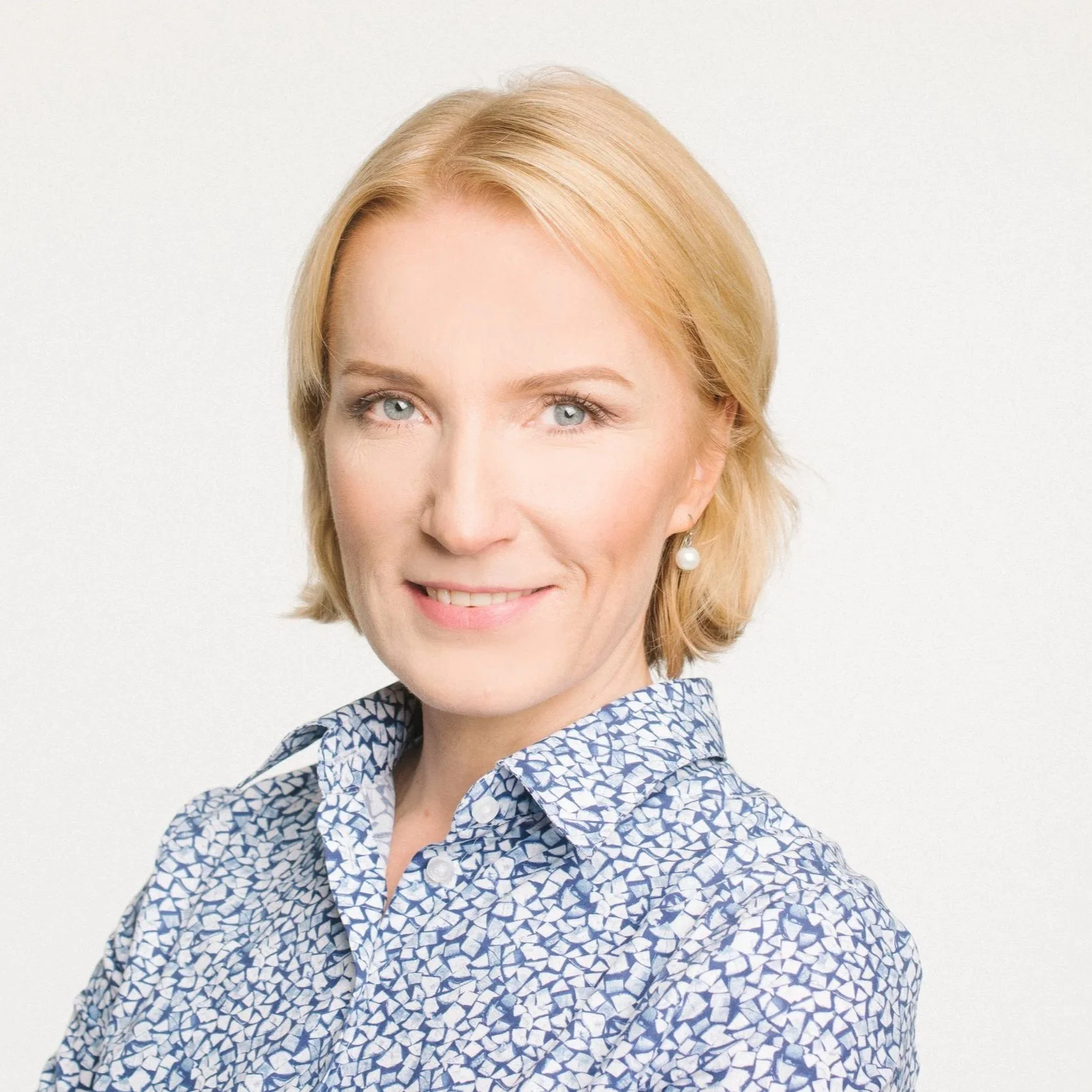
Elis Paemurd, Deputy Head of Representation, Head of Media and Communication
Elis Paemurd is the Head of Media and Communication at the European Commission Representation in Tallinn. Her main task is to hold media relations and to facilitate communication of EU policies and priorities to the Estonian audience. Commission Representation acts as a liaison between the Commission and stakeholders in Estonia, providing political and economic information to the Commission, and promoting EU policies to Estonian public and media.
Leif Lønsmann, Senior advisor and board member at the Nordic Journalist Centre (Denmark)
Mr. Leif Lønsmann has 40+ years of experience in journalism and editorial management as a journalist, editor-in-chief and CEO at Danish Broadcasting Corporation (DR). Besides his engagement with DR, he has carried out journalistic and editorial tasks as editor, jury member, journalism teacher, board member etc. for a wide range of National and International organizations, including Nordic Journalism Center, IMS International Media Support, IPI International Press Institute, EBU European Broadcasting Union and EAVI European Association of Viewers Interests. Having left DR in 2018, Mr. Lonsmann has dedicated his skills to journalism training, media consultancy and Civil Society Organizations, including the Danish Helsinki Committee for Human Rights, where he acts as deputy chair. Currently he is engaged by 10+ universities, journalism schools or civil society organizations in Ukraine and the Baltics, focusing on young people’s media literacy and resilience.
 Rozīte Katrīna Ponne, Head of the Country Office of Latvia at German-Baltic Future Foundation, Research Assistant, German Bundestag
Rozīte Katrīna Ponne is Head of the Latvian Country Office of the German-Baltic Future Foundation (DBJW) and a Research Assistant at the German Bundestag, working on European affairs and matters related to the EU and NATO Parliamentary Assembly. She is a PhD student researching ethnic identity, with a particular interest in culture, cultural heritage, and collective identity. She also serves on the Board of the 2×2 World Latvian Youth Seminar. Through her professional and academic work, she is engaged in strengthening cooperation between Germany, the Baltic states, and Ukraine, with a focus on cultural dialogue, European cooperation, and democratic resilience.
 Zoran Vasic – First Secretary, Head of Communication, Cultural Affairs, and Resilience Initiative, Embassy of the Federal Republic of Germany in Tallinn
Zoran Vasic is a German diplomat and the Head of Communication, Cultural Affairs, and Resilience Initiative at the German Embassy in Tallinn. A fully qualified legal professional and certified mediator, he brings extensive experience in conflict resolution and legal affairs to his current role. He joined the German Federal Foreign Office in 2023 as a Desk Officer focusing on international secondments to Peacekeeping Operations. Prior to his diplomatic career, Zoran spent nearly a decade working as a mediator and legal specialist in the private sector.
Dr Agnese Dāvidsone, Rector, Vidzeme University of Applied Sciences (Latvia)
Dr Agnese Dāvidsone is Rector of Vidzeme University of Applied Sciences, an Associate Professor and a leading researcher in media and communication. Her expertise includes media literacy, strategic communication, civic participation and digital education. She has been a corresponding member of the Latvian Academy of Sciences since 2022. Her research explores the connections between media and information literacy, journalism quality, education and public participation. She has extensive experience developing and managing international research projects and evaluating EU-funded initiatives. Her work offers valuable perspectives on how education, critical thinking and cooperation between universities and communities can strengthen informed democratic participation and societal resilience.
UK embasy representative TBA
Panel “Soft Security in Practice: Civil Society, Culture, Media Resilience and Youth Participation Against Community Polarisation”
 Dmitri Teperik, Co-founder and Director, National Centre of Defence & Security Awareness (NCDSA), Estonia
With over 15 years of experience in leadership and senior expert roles, Dmitri Teperik has contributed to numerous international research projects, interdisciplinary studies, development cooperation programmes, professional training initiatives and public outreach activities. His work focuses on comprehensive resilience and strategies to counter foreign hostile influence, disinformation and societal polarisation. His research covers a broad range of topics, including the socio-psychological factors shaping national identity, societal resilience and cohesion, cognitive security, futures literacy, cross-sectoral crisis management, media consumption, situational awareness in the information environment, and the relationship between strategic communication and civic behaviour. His primary geographical areas of expertise include Ukraine, the Baltic States and post-communist countries in Eastern Europe. In 2016, Dmitri co-founded Resilience League, an international training and cooperation platform dedicated to equipping young professionals and experts with practical knowledge, skills and tools to strengthen cognitive resilience against hostile disinformation, societal polarisation and harmful radicalisation.
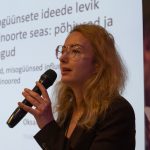 Oksana Belova-Dalton, Research Fellow in International Relations at the University of Tartu
Oksana Belova-Dalton is a Research Fellow in International Relations at the Johan Skytte Institute of Political Studies, University of Tartu. Her research areas are terrorism, political violence and radicalisation, preventing and countering violent extremism (P/CVE), and Russia’s hybrid warfare. Her research focuses on how radicalisation and political violence manifest in Estonia and on efforts to prevent them, and connects with Russia studies through the analysis of extremist actors, political discourses and hybrid influence activities. In her recent article in Behavioral Sciences of Terrorism and Political Aggression (2026), she examines how Estonian youth perceive the risk of political violence, highlighting young people’s potential role as first responders to radicalisation among their peers. She teaches and supervises students in security and terrorism studies at the University of Tartu and the Estonian Academy of Security Sciences. She also actively shares her expertise with practitioners, policymakers and the wider public, including through media appearances.
 Chrysa Vlachopoulou, British Council, Business Development & Operations Manager, Youth Connect programme – Europe (Greece)
Chrysa Vlachopoulou is a cultural professional and programme leader with over 15 years of experience in culture, education and international cooperation. She specialises in strategic programme development, cross-sector partnerships and fostering meaningful international collaboration. Currently serving as Business Development and Programme Manager for Europe at the British Council, Chrysa leads initiatives that connect organisations, institutions and communities through non-formal education, cultural exchange and international cooperation. Her work focuses on developing strategic partnerships, facilitating knowledge exchange and strengthening collaboration across Europe and the United Kingdom. She holds a Master’s degree in Cultural Management, Communication and Media and has extensive experience working with educational institutions, public authorities and industry partners. Throughout her career, Chrysa has been committed to bridging sectors, cultures and communities, transforming shared ambitions into impactful initiatives and sustainable partnerships. Passionate about the transformative power of culture and education, she is particularly interested in promoting intercultural dialogue, mutual understanding and inclusive cooperation that creates lasting value for individuals, organisations and communities.
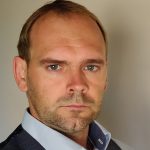 Priit Talv is the Editor-in-Chief of Propastop
, a blog focused on identifying information influence activities and Russian propaganda. He has extensive experience in identifying, analysing, and describing information manipulation, propaganda, and information disorder. From 2021 to 2023, he served as Deputy Head of Strategic Communications at the Government Office of Estonia, and from 2023 to 2026 as Head of Strategic Communications. During these years, his work focused primarily on Russia’s full-scale war against Ukraine and its impact on the Estonian state and society. Priit Talv has also been actively involved in promoting media literacy in Estonia for many years. He has developed a curriculum on media literacy and information security for upper-secondary school students in Estonia. In recent years, he has also contributed to Estonia’s comprehensive national defence and civil protection efforts, with a particular focus on clarifying the role of individuals and different parts of society in responding to crises. He has also helped strengthen the crisis resilience of the Estonian media landscape by organising large-scale exercises for media organisations.
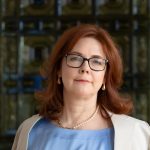 Zane Matsesovica, Country Director of the British Council in Latvia
Panel discussion “Youth Voices, Shared Decisions: Building Resilience in the Age of AI”
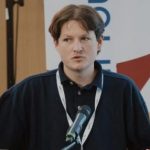 Tom Teske, Member of the Committee of Youth Representatives, Baltic Sea Region Youth Forum (BSRYF) | International Commissioner, German Scout Association
Tom Teske is a member of the Committee of Youth Representatives of the Baltic Sea Region Youth Forum (BSRYF), where he contributes to the Working Group on Climate and Environment. His work focuses on environmental and geopolitical challenges in the Baltic Sea region, advocating for the protection of its unique ecosystems while promoting meaningful youth participation in regional security and international affairs. He is also actively engaged in the German-Baltic Future Foundation and brings extensive experience in youth leadership and non-formal education through his long-standing involvement in the German scouting movement, where he currently serves as International Commissioner. Tom holds an academic background in International Relations and is pursuing a Master’s degree in History and Culture of the Baltic Sea Region at the University of Greifswald, Germany.
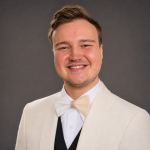 Karl Mattias Sepp, Deputy Secretary-General, YATA Estonia
Karl Mattias Sepp is the Deputy Secretary-General of the Estonian Atlantic Treaty Association (EATA) and President of the Youth Atlantic Treaty Association Estonia (YATA Estonia). His work focuses on Euro-Atlantic security, NATO-EU cooperation, democratic resilience, youth engagement and international partnerships. With extensive experience in civil society leadership, international project management and public diplomacy, he has organised and moderated high-level international conferences, policy discussions and educational initiatives bringing together policymakers, diplomats, security experts and young professionals. He is also a member of Team Europe, contributing to public education on European affairs, democratic participation and the European Union’s role in Estonia’s security and development. Previously, he served as President of the Tallinn University Debate Club, Chair of the Tallinn City Youth Council and Estonia’s National Youth Delegate to the Council of Europe.
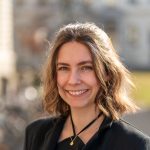 Norina Pommerening, Committee of Youth Representatives, Baltic Sea Region Youth Forum (Germany)
Norina Pommerening is a member of the Council of Youth Representatives in the Baltic Sea Region Youth Forum. In the Youth Forum, she also co-leads the working group on digital literacy and democracy. The working group provides a space for young people from the region to engage with digital literacy and civic resilience, demystifying AI and emerging technology, as well as digital democracy and digital rights and share policy recommendations from a youth perspective. The working group also participates in projects on FIMI and disinformation with other partner organisations. In addition to her work in the BSRYF, Norina has an academic background in peace and conflict studies and is currently a doctoral researcher focusing on technology in education.

Noora Soininvaara, Member of international committee, Finnish National Youth Council (Finland)
Noora Soininvaara is a member of the international committee of the Finnish National Youth Council and Youth Sector, which advocates for young people’s voices and rights at both national and international levels. She works as a child rights ambassador, educating and engaging young people on a range of topics, including children’s rights and sustainable development. She holds an academic background in social work and is particularly interested in social structures and resilience, as well as how societies can better support young people and promote their well-being and participation.
 Elīza Elsiņa, International Security Adviser, Latvian United Nations Youth Delegation (Latvia)
Elīza Elsiņa is International Security Adviser to the Senior Youth Delegate of Latvia to the United Nations. Through consultations, conferences, school visits and UN Security Council simulations, the Latvian UN Youth Delegate Programme gathers young people’s perspectives on global challenges while deepening their understanding of international institutions and empowering them to participate in policymaking. Her interests lie in societal resilience, strategic communication and the role of soft power in international relations. Alongside her academic background in international relations and diplomacy, Elīza works in communication and media relations within a diplomatic representation.
Nikola Lewicka, BSRYF / Committee of Youth Representatives (Poland)