

CONFERENCE MODERATOR
 Ambassador Hatem Atallah (Tunisia)
Coming from a rich diplomatic background that encompassed over 35 years, Ambassador Atallah was the Tunisian Ambassador in several countries including the US, the UK, South Africa and Ethiopia, He was also the Permanent Representative of Tunisia to the Organization of American States, the African Union, the Economic Commission for Africa, UNEP (United Nations Environment Programme), UN-Habitat, and the International Maritime Organization. He was appointed the Diplomatic Advisor to the Head of the Tunisian Government until February 2015. Ambassador Atallah participated in numerous summits, ministerial meetings and high level conferences of the African Union, the United Nations and the Union for the Mediterranean.
From March 2015 to December 2017 he served as Executive Director of the Anna Lindh Foundation for Dialogue between Cultures in the Euro-Mediterranean Region. Ambassador Atallah serves as Vice Président of the Euro-Med University (EMUNI) in Slovenia and member of the Senate. He also serves on the Board of Governors of the Gorée Institute in Sénégal and is a founding member of « AVASP » (Institute for Strategic Analysis and Prospective Studies – Tunis).
EXPERTS and SPEAKERS

Elis Paemurd, Deputy Head of Representation, Head of Media and Communication
Elis Paemurd is the Head of Media and Communication at the European Commission Representation in Tallinn. Her main task is to hold media relations and to facilitate communication of EU policies and priorities to the Estonian audience. Commission Representation acts as a liaison between the Commission and stakeholders in Estonia, providing political and economic information to the Commission, and promoting EU policies to Estonian public and media.
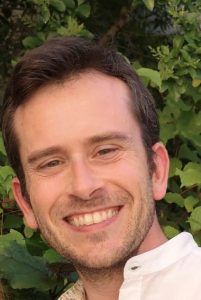 Luc Meissner, expert of Governance, Fragility, Conflict and crises at Belgian agency for international cooperation
Luc Meissner is an expert on Governance, Fragility, Conflict and crises at Enabel, the Belgian public agency for international cooperation. At this position since April 2022, he works on advising and developing programmes in fragile and complex contexts, especially those affected by conflicts (Sahel, Great Lakes region). He has more than 20 years of experience in humanitarian and development projects for various NGOs both at country and HQ level, mainly on Central and Western Africa and the Caribbean. He is skilled in governance, peacebuilding, armed violence reduction, humanitarian negotiation, human rights and access to justice in contexts affected by crises and conflicts. Educated in public management, international humanitarian law and humanitarian assistance at Aix-Marseille University, France, his mother tongue is French, but he may also work in English or Spanish.
 Rilli Lappalainen, President of CONCORD Europe, CEO of Finnus
Rilli Lappalainen is President of CONCORD, European Confederation of NGOs working on sustainable development and international cooperation. CONCORD is committed to shaping an EU that champions sustainable development and that embodies the “Leaving No One Behind” principle. Rilli is also founder and CEO of Bridge 47 network, which is a global network of CSOs, researchers and policy makers to promote the implementation of SDG 4.7. Our mission is to work towards a fairer and more sustainable world through active citizenship, including Global Citizenship Education and other value-based educations. Bridge 47 advocates for the recognition of non-formal and informal education equally important like formal education, as well as lifelong learning. We believe that education itself needs to be transformed, and we emphasize the essential role of education in transforming societies towards a more sustainable future. In parallel Rilli works as sustainability consultant to help especially civil society actors and public institutions to make their work mlore sustainable in systemic way. His background is a combination of more than 30 years long career from local to global level to fight for global solidarity and sustainable development in Finland, Europe and global organisations. Rilli has experiences of working in all continents from local projects to UN level policy processes. Rilli’s background in engineering, education and international politics has supported the passion of finding better ways to integrate learning and education in politics and practices and mixing things up to find new solutions for all.
 Margus Gering, Head of Cooperation and Development for Ukraine, Estonian Centre for International Development
Margus Gering is Head of European Region at the Estonian Centre for International Development (ESTDEV). He leads Estonia’s development cooperation and reconstruction portfolio in Ukraine, Moldova, Georgia and Armenia, with a focus on recovery and reconstruction, as well as initiatives in democracy and the rule of law, education, and digital and cyber cooperation. Margus currently coordinates a wide range of recovery and reconstruction initiatives in Ukraine’s Zhytomyr region and beyond, bringing together local authorities, civil society and international donors. Prior to joining ESTDEV, Margus served for a decade in the Estonian diplomatic service, including postings as Political Officer in Tbilisi and Deputy Head of Mission at the Estonian Embassy in Kyiv, where he worked extensively on Eastern Partnership, security and democracy support. He holds a Master’s degree in Political Science from the University of Tartu and was awarded the Order of the National Coat of Arms, 5th Class, in 2023 for his contribution to Estonia’s foreign and development policy.

Eleanor Carey, Policy Analyst, Development Co-operation Research Unit, Organisation for Economic Co-operation and Development
Eleanor Carey is a Policy Analyst in the OECD’s Development Co-operation Directorate. She manages the flagship report, which in 2026 will focus on the future of international development co-operation. Since joining the OECD in 2020, she has led and contributed to research on a wide range of issues affecting development co-operation, including COVID-19, digitalisation, poverty and inequality, Russia’s war of aggression against Ukraine, debt vulnerabilities, and most recently, cuts to Official Development Assistance. Prior to joining the OECD, Eleanor supported developing-country governments and multilateral organisations in strengthening data systems, analytics, and evidence use. She holds two master’s degrees from the University of Manchester, UK (Applied Statistics and International Development).
Global challenges and its impact on Estonia and the World panel
 Triin Roos. Executive Director of Estonian Roundtable for Development Cooperation (Estonia)
Triin Roos is the Director of the Estonian Roundtable for Development Cooperation, bringing a strong background in civil society leadership, youth participation, and international cooperation. Before taking on her current role, she led the Estonian National Youth Council and coordinated the European Youth Dialogue process in Estonia, helping to strengthen meaningful youth engagement and inclusive policymaking. She has experience as a moderator and trainer, working with young people on advocacy, participation, and funding topics. Triin’s expertise lies in civil society development, and she has recently begun working in the field of development cooperation. She holds a Bachelor’s degree in Public Relations from Tallinn University and a Master’s degree in Political Science, with research focused on migration framing. Triin combines a strong understanding of societal processes with solid communication skills and the ability to guide multi-stakeholder discussions on complex global issues.
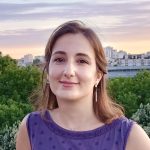 Aysegul Bayar Hildgen, Civil Society Policy Analyst, Development Co-operation Research Unit, Organisation for Economic Co-operation and Development (France)
Aysegul Bayar Hildgen is a Policy Analyst in the OECD Development Co-operation Directorate, where she provides policy guidance to DAC members in implementing the DAC Recommendation on Enabling Civil Society in Development Co-operation and Humanitarian Assistance. Her work focuses on the Recommendation’s three interconnected pillars: protecting civic space; supporting and engaging with civil society; and incentivising accountability and transparency of civil society organisations (CSOs). She also coordinates systematic engagement between DAC members and CSOs, facilitating dialogue, and evidence-based policy discussions. Before joining the OECD, Aysegul worked at the Paris Peace Forum, where she oversaw programme development and implementation. Previously, she oversaw the social development grant programmes at the Sabancı Foundation in Turkey, leading projects in gender equality, youth empowerment, disability rights, and quality education, while providing capacity strengthening to partner CSOs. Earlier in her career, she contributed to research on poverty eradication at the Institut de Recherche pour le Développement (IRD) in Paris, and worked as a monitoring and evaluation specialist on UN and EU funded development programmes. Aysegul holds two Master’s degrees: one in International Development and Human Rights from Sciences Po Paris, and another in Political Science from Université Paris Dauphine.

Michael G. Kavuklis, Coordinator in Chief of the Europe, Entrepreneurship & Sustainable Development Forum of Rhodes
Michael G. Kavuklis is a Political Scientist / International Relations (BA, MA) and owner of the marketing agency mgk.advertising, from Rhodes, Greece, specialised in branding, web development, content developement, local marketing, digital marketing and marketing in the sectors of tourism, SMEs, academia, culture and civil society. He is a certified alternative tourism consulant. He has a long experience and involvement in projects as youth and for youth, intercultural dialogue, active citizenship, European integration, sustainbable development and entrepreneurship. He currently serves as the President of the House of Europe in Rhodes, Founder and Head of the Organizing Committee of the “Rhodes Model Regional Co-operation” youth leadership conference, Founder and Head of the Organizing Committee of the Europe, Entrepreneurship & Sustainable Development Forum – EESD Forum Rhodes, Vice President of the European Network for Education and Training e.V. – EUNET and the Focal Point of the Greek Network of the Anna Lindh Foundation for Aegean and Crete.
 Mahmoud Ezzat, Director of Center for Strategic Studies, Bibliotheca Alexandrina (Egypt)
Dr. Mahmoud Ezzat got his PhD in political science in 2017 from the Institute of Asian Studies and Researches in Egypt. In addition, his Master’s degree in political science in 2013 from the faculty of Economics and Political Science, Cairo University. He is an Egyptian researcher and writer in the political, historical and cultural, media fields. His contributions have been published in several magazines and periodicals in Egypt, Spain, Saudi Arabia, Lebanon, and Europe. He has been awarded the Egyptian state incentive award in social science “Media and Press branch” 2013, the international organization of African and Asian writers annual prize 2009 and Al- Kindy prize (Best website in the Arab world), Syria 2009. He’s responsible for the cultural exchange file at Central Projects and services sector and promoting the cultural cooperation between Bibliotheca Alexandrina and foreign organizations, institutions, and NGOs “Locally, regionally and internationally” Also was responsible for the Memory of Modern Egypt website, and for several documentation websites. He has been named as a general coordinator of the International Football Tournament for Media and Journalists.
 Mette Brogden, Ph.D., Professor of Practice, University of Arizona School of Global Studies/Human Rights Practice, University of Arizona (Tucson, AZ, USA)
Dr. Brogden is a cultural and medical anthropologist who teaches graduate level courses on Migration Pathways (Central America to the U.S., and West Africa to Europe); Human Rights Crises and Trauma, CSOs & NGOs Advancing Human Rights. She holds a Ph.D. from University of Arizona. Mette`s research interests include international migration; trauma impacts and social healing from extreme violence and human rights violations; indigenous rights and cultural heritage protection; and rights of species and ecological systems. From 2003-2017 while serving in leadership positions in resettlement agencies, state and city governments in Tucson, Texas, Wisconsin, Baltimore and Seattle, she oversaw the resettlement and integration of over 13,000 refugees to the U.S. from various of African countries, Asian and Middel East countries, the former Yugoslavia, and the former Soviet Union. Prior to 2003 she served as a neutral mediator/ facilitator in environmental and public policy conflict resolution processes across local, state, and national levels at UA’s Udall Center for Studies in Public Policy.
 Rashid Abubakar Iddrisu , Founder and CEO of WIACT (Spain/Ghana)
Rashid Abubakar Iddrisu is the Founder/CEO of World Institute of Africa Culture and Traditions (WIACT) in Sawla, rural northern Ghana (2019) and also founded Culture Environment Human Development Association (CEHDA) in Spain (2008) where he is a legal permanent resident. In Barcelona, he helps migrants to stabilize, meet basic needs and grow food. He travels frequently back to Sawla to oversee the affiliate NGO CEHDA Ghana in recovering traditional agricultural and culinary practices, and to develop local opportunities for youth so they do not need to try to migrate to Europe for economic opportunities. WIACT works with tribal elders to document African languages and traditional cultures, and to implement indigenous education in K12 schools that young people can reconnect with their ancestral heritages, local environments, and traditional ecological knowledge (www.wiactghana.org)
The future of development cooperation & possible scenarios panel

Stefanos Vallianatos, Co-Founder of Fotoessa, Head of Greek Network of Anna Lindh Foundation (Greece)
Stefanos Vallianatos holds a Ph.D. in International Politics (on Middle East Foreign Policy Making) from Lancaster University and and an MA on Western European Politics. Currently, he is heading the department of International Relations of the Hellenic Foundation for Culture, and is co-founder of the CSO Fotoessa (for Eductaion, Research & Action). He is also the coordinator of the Greek National Network of the Anna Lindh Foundation, has taught Middle East and Balkan Politics, participated in several conferences and gave lectures on Middle East Politics, on the state of Civil Society in the Euro-Med and the Middle East, on civic education and on intercultural dialogue and cities. He is a certified trainer on Creative and Social Entrepreneurship and has implemented projects educational, cultural and creative nature. His publications include volumes on International Relations in the Middle East, on the political system and evolution of Iran, on Arab Civil Society after the Arab Spring, the ALF and EUNIC: case studies of multi-lateral cultural diplomacy, Euro-Mediterranean Civil Society at a crossroad, and others.
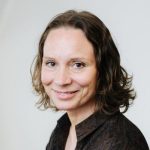
Janet Vähämäki, Senior Researcher, Stockholm Environment Institute and Swedish Defense Research Agency
Janet Vähämäki is a Senior Research Fellow at SEI Headquarters and Director of the Swedish Development Research Network (SweDev). Her research focuses on governance of development aid and trust patterns in development management. She holds a PhD in Business Administration from Stockholm Business School and a Master’s in Political Science and International and Comparative Education from Stockholm University. Janet has worked for Sida, the Swedish Ministry for Foreign Affairs, and several development NGOs, and has conducted consultancy assignments for organizations including the OECD, the World Bank, and Swiss Development Cooperation Agency. She has lived and worked in South Africa, Honduras, and Brazil.
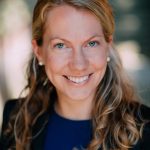
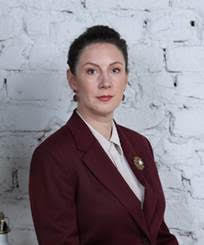
Dana Heiberga, Development Cooperation Agency in Latvia
Ms. Dana Heiberga is the Chief Officer for Development Cooperation at the Central Finance and Contracting Agency (CFCA) of Latvia. Since 2022 CFCA has become the Development Cooperation Agency of Latvia and Ms. Heiberga has been in charge of setting up the agency and now is Head of Development Cooperation Department of CFCA. Since 2024 CFCA has been pillar-assessed by the European Commission. Previously, Ms. Heiberga had been professionally involved in the national system for administration of EU Cohesion Policy funds in Latvia working in different roles both in CFCA and also in the Ministry of Environment and Regional Protection and the Ministry of Finance as well in beneficiary institutions.
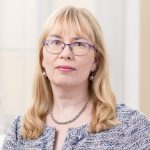 Kairi Saar-Isop, Director General, Department for Development Cooperation and Humanitarian Aid, Estonian Ministry of Foreign Affairs
Kairi Saar-Isop is the Director General responsible for Estonia’s development cooperation and humanitarian aid policy at the Ministry of Foreign Affairs. She oversees Estonia’s global partnerships, humanitarian response, and development programmes, with a strong focus on democracy support, digital development, and building resilient communities. Representing Estonia in international fora, she works closely with EU institutions, UN agencies, and civil society to advance effective, transparent, and future-oriented development cooperation.
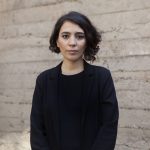 Tamta Mikeladze, Director of the Social Justice Center (Gerorgia)
Tamta Mikeladze is the Director of the Social Justice Center in Tbilisi, Georgia, and an advocate for human rights and social justice. She is also an Associate Professor at Ilia State University, where she teaches interdisciplinary courses on human rights law, theory of law, radical democratic theories, minority rights and policies, and religion and politics. In addition, she is pursuing a PhD in social and cultural anthropology. The Social Justice Center is a Tbilisi-based leftist and feminist organization working at the intersection of human rights and social justice in Georgia. Its mission is to expose structural roots of economic, social, and political injustice, disseminate critical knowledge, and foster the democratic transformation of the existing order. For over 12 years, the organization has focused on protecting and promoting rights through strategic litigation, legal assistance, rights monitoring, and advocacy. It also engages in critical research, deep dialogue with social groups and citizens, bottom-up democratic organizing, and building solidarity across diverse communities. The organization aims to bring the real needs, concerns, and political demands of local groups into the political agenda and co-create change alongside them.
Keynote speakers
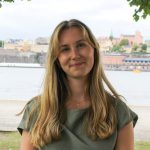 Rebecca Eriksson, Junior Research Fellow, Norderio (Sweden)
Rebecca Eriksson is a Junior Research Fellow at the international research institute Nordregio, with an interdisciplinary background spanning geography, planning, sociology, and economics. With primary experience in regional development and marine governance, her work focuses on participatory governance, the digital transformation of decision-making processes, marine spatial planning and management, environmental and social justice, and the relationships between people and the ocean across the Nordic, North Atlantic, and Arctic regions. Working mainly at the local and regional governance levels, as well as with youth, she collaborates with a wide range of actors through applied research, contributing to socially grounded and community-engaged approaches to policy-making. Her work also bridges sustainability and local action, and she is part of Nordregio’s Agenda 2030 team, actively involved in the project Sustainable Nordic Municipalities and Regions. This project aims to advance the Nordic perspective on the remaining years of Agenda 2030 and to communicate Nordic priorities in shaping what comes next, the post-2030 agenda.
 Associate Professor Michael Søgaard Jørgensen, Aalborg University (Denmark)
Associate Professor Michael Søgaard Jørgensen is an Honorary doctor, Associate Professor at Department of Sustainability and Planning at Aalborg University Denmark and coordinates research within sustainable production and consumption. He holds a M.Sc. in Chemical Engineering and a PhD in technology assessment. His main research focuses on sustainable innovation and sustainable transition. Currently his research topics are: Circular economy with a focus on product lifetime, business models, civil society activities within product repair, and the possibilities of public authorities to support circular economy. Second research topic is sustainable transition of production and consumption of food with a specific focus on plant-based food and its potentials for health, environment and employment. Since 2019, he is the chairman of the Society of Green Technology within Danish Society of Engineers. He is also their expert on product lifetime and member of their working group on critical raw materials.
Media warfare and comminity resilience panel
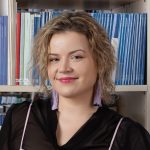 Maia Klaassen, Junior Research Fellow in Media Literacy, Institute of Social Studies, University of Tartu, Coordinator of Baltic EDMO hub BECID (Estonia)
Maia is a Junior Research Fellow in Media Literacy at the Institute of Social Studies at the University of Tartu. She coordinates the Baltic Engagement Center for Combatting Information Disorders (BECID; one of 15 hubs combatting disinformation in the pan-European EDMO network) and the programme manager for the interdisciplinary 1-year MA degree Disinformation and Societal Resilience. In addition to teaching information disorder-related subjects at the university level, she also shares knowledge through non-formal and informal learning, leaning on more than 10 years of experience from nongovernmental and youth organisations. Her practitioner background and academic networks have equipped her with a bird-eye view of the information security ecosystem and civil society’s role in it.
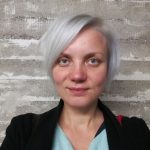 Anneli Ahonen, research associate of Cardiff University
Anneli Ahonen is a Research Associate at the Security, Crime & Intelligence Innovation Institute, Cardiff University. She brings extensive experience in countering disinformation and has authored a report on the “Ghostwriter” cyber-enabled influence campaign. Before her academic work, she headed the East StratCom Task Force at the European External Action Service, leading strategic communications efforts in Eastern Partnership countries and overseeing the EU’s disinformation responses, including the EU vs Disinfo initiative. She has also worked as a journalist in St. Petersburg for Helsingin Sanomat
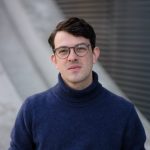 Oliver Moody, Berlin Correspondent for The Times; Author of Baltic: The Future of Europe (Germany/UK)
Oliver Moody has been the Berlin bureau chief for The Times, covering Germany, northern and central Europe, since 2018. Before that he was a leader writer and award-winning science journalist at the newspaper.
His first book, Baltic: The Future of Europe, was published in 2025 and looks at how northeastern Europe has become an engine of innovation, above all in the field of geopolitics.
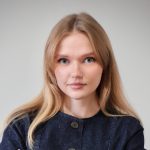 Julia Dobrowolska, Researcher, University of Warsaw (Poland)
Julia Dobrowolska, PhD student at the Doctoral School of Social Sciences at the University of Warsaw in the field of political science and administration. She holds a degree in European Studies from the Faculty of Political Science and International Studies at the University of Warsaw. Her research focuses on disinformation and counter-disinformation efforts within the European Union, with particular attention to the role of NGOs in supporting national anti-disinformation policies. Professionally, she works as an analyst and fact-checker.
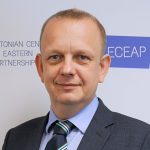 Gert Antsu – Director for Ukraine, Moldova & the South Caucasus, Ministry of Foreign Affairs of Estonia
Gert Antsu is a seasoned Estonian diplomat currently overseeing relations with Ukraine, Moldova and the South Caucasus at the Estonian Ministry of Foreign Affairs. He served as Estonia’s Ambassador to Ukraine (2016‑2019) and previously to Belgium, Luxembourg and Switzerland (2012‑2016), bringing years of experience in EU affairs, Eastern partnership policy and international cooperation. A graduate of the University of Tartu and the College of Europe, he has played a key role in Estonia’s foreign policy and integration efforts. He continues to focus on reform, security and regional partnerships in Europe’s eastern neighbourhood.
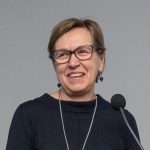 Ursula Roosmaa, Country Director, British Council Estonia
Ursula Roosmaa is the Country Director of the British Council in Estonia, where she leads a diverse portfolio of initiatives spanning education, arts, culture, and social engagement. With a career dedicated to fostering cross-cultural understanding and collaboration, Ursula has played a pivotal role in strengthening the educational and cultural ties between Estonia and the United Kingdom. A graduate of the University of Tartu in English language teaching, translation, and philology, Ursula began her professional journey at the National Library of Estonia and the Council of Europe Information Center. Since joining the British Council, she has been instrumental in developing programs for teacher and school-leader professional development, supporting social inclusion, and promoting early childhood education initiatives that bring communities together. In recognition of her outstanding contribution to education and cultural exchange, Ursula was appointed a Member of the Most Excellent Order of the British Empire (MBE) in 2019. She is widely respected for her commitment to fostering dialogue, understanding, and cooperation across borders, making her a leading voice in Estonia’s cultural and educational landscape.
Development Cooperation and Civil Society panel
 Anneli Ohvril, Green Tiger Foundation (Estonia)
Anneli Ohvril is a sustainability and circular economy expert from Estonia with over 20 years of experience managing projects across the private, public, and civil society sectors. She is the Co-Founder and CEO of Let’s Do It World, the largest environmental organization globally, with representatives and offices in 164 countries. Let’s Do It World leads the UN-recognized World Cleanup Day, an initiative that engages tens of millions of people annually to pick up trash and raise global awareness of the waste problem. In Estonia, Anneli has spearheaded various social and environmental initiatives, including movements against single-use plastics, promoting composting habits, and initiating environmental projects for children and youth. Anneli is also a member of Green Tiger, a cross-sector collaboration platform launched in 2020. The platform aims to devise, teach, and implement plans for a balanced economy. Green Tiger unites over 80 Estonian companies under the belief that a joint and coordinated green leap has a greater societal impact than isolated actions. Its mission is to share knowledge and tools for sustainable change while providing a collaborative platform for sharing experiences, successes, and lessons learned. Anneli’s mission is to initiate Global Green Academy that engage change makers for the joint network to share the knowhow and support. Anneli holds two master’s degrees: Economics (University of Tartu, 1995) and Change Management in Society (2020).
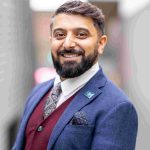
Zahid Mahmood, British Council – Director and Cultural Attache (UK/Libya)
Zahid Mahmood is the British Council’s Country Director for Libya and Cultural Attaché, with extensive experience in advancing cultural relations and inclusive leadership across the Middle East, Sub-Saharan Africa, and South Asia. Over the course of his career, Zahid has worked in fifteen countries across three continents, including complex and fragile environments such as South Sudan, Syria, and Pakistan. A committed advocate for the role of civil society in fostering stability and social cohesion, Zahid has designed and led programmes that strengthen community institutions, expand opportunities for young people, and build local capacity in education, governance, and the creative sectors. He has overseen multidisciplinary teams delivering initiatives that promote civic participation, empower marginalised groups, and support the development of responsive, resilient civil-society ecosystems. Zahid’s work in cultural relations focuses on creating meaningful connections between communities through the arts, education, and dialogue. He has championed partnerships that enhance mutual understanding, develop cultural and creative industries, and reinforce trust between the UK and international partners. His leadership emphasises equality, diversity, and inclusion, ensuring that cultural exchange is accessible, values-driven, and reflective of the societies it serves. He is currently a doctoral researcher at the University of Manchester (UK), where his work explores cultural soft power and the role of religion in the Middle East, with a particular focus on how cultural narratives, identity, and interfaith engagement shape diplomacy, influence, and social transformation.
Mostafa Abbas, President of the Euro-Med Youth Federation e.V. (Germany)
Mostafa Abbas is a seasoned civil society leader with extensive experience at national, regional, and international levels. Holding a Master’s degree in Law, he combines legal expertise with hands-on field experience. He currently serves as a national security researcher at Leipzig University (Germany) and ULSIT University (Bulgaria). He also served on the Liaison Team of the EU Youth Dialogue Platform for External Action (INTPA G3), contributing to youth policy and intercultural cooperation. He is the President of the Euro-Med Youth Federation, the Egyptian Youth Federation, a European Climate Pact Ambassador, and a Steering Committee Member of the EU Global Gateway CSO-LA Platform. Bridging law, civil society engagement, and national security research, Mostafa brings a comprehensive perspective on how NGOs strengthen societal resilience and enhance human security in an increasingly complex global environment.
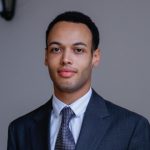 Stelvy Emerson Banzouzi, Co-Founder of the Union for the New AFrican and European Generation (France/DR Congo)
Stelvy Emerson Banzouzi is the Co-Founder and Founding President of the Union pour la Nouvelle Génération Africaine et Européenne (Union for the New African and European Generation -UNGAE),an organisation dedicated to empowering youth leadership and advancing intercontinental cooperation between Africa and Europe. Actively engaged in EU-level youth diplomacy, he contributes to platforms such as the Youth Democratic Cohort, the German-Baltic Youth Exchange Network, and the Youth Core Group of the European External Action Service (Africa Department). He specialises in Europe–Africa relations and Africa’s evolving partnerships with the Global South.

Tetiana Revenko – Director, Foundation „Dwa Skrzydła UA” (Poland/Ukraine)
Tetiana Revenko is the Director of the Foundation „Dwa Skrzydła UA”, a Polish-registered organization supporting Ukrainian refugees, particularly women and children. Under her leadership, the foundation implements educational, psychological, and cultural programs, including summer camps and community activities, aimed at helping children adapt and thrive in their new environment. She emphasizes the importance of social integration and resilience, fostering connections between Ukrainian refugees and local Polish communities. Tetiana has been instrumental in developing initiatives that empower families, provide practical support, and promote cross-cultural understanding. Through her work, she highlights the critical role of civil society in responding to humanitarian crises and strengthening community cohesion.
 Margit Säre – Chairwoman & Project Manager, Peipsi Center for Transboundary Cooperation (Estonia)
Margit Säre leads the Peipsi Center for Transboundary Cooperation, driving efforts in sustainable development, cross-border collaboration, and environmental education in the Lake Peipsi region. With strong academic credentials in social work, European integration, and minority rights, she has overseen influential projects such as GreenMind, SAME World, and heritage education initiatives. Under her guidance, Peipsi CTC actively promotes civil society engagement, transboundary water management, and ecological awareness.
Youth panel
 Mathias Nikolai Berg, Leader of Grorud Venstre (Norway)
Mathias is one of many political youth in the city of Oslo, He was the longest sitting youth council member. Having been one for 6 years. Then transitioning into party politics for the liberal party of Norway, as one of the youngest 1. Candidates during the election of 2023. Mathias is currently the leader of Grorud Venstre. Mathias has attended conferences before, and has developed politics and represented the liberal party in debates about climate politics. His last contribution was conducting a speech and participation in public debates in the framework of Nordic-Baltic Sustainability Conference 2024 “Empowering CSOs and Communities for Sustainable Change: building the green future of the Nordic-Baltic region” in Reykjavik, Iceland.
 Alejandra Adventure, Nordic Youth Organization (Denmark)
Alejdanra Adventura is Youth assistant at YTOP international. She is aa cofounder and project manager for HumanAid Kakuma and board member at Nordic Youth Organization. Project coordinator at Blå veje organisation and project Feniz. Co-founder of Melodies that Matter, humanitarian aid concerts. She has been active in many educational programms: Women’s federation for World peace – Peace bridge, Blue Self-Defence training, Møn film highschool short-film festival and Nordic-Baltic sustainable development partnership projects. After 14 years of active participation in various youth organizations, this much is clear: “If you plan to be here tomorrow as well, no matter your age, you too are the future. Together individuals build a sustainable world”.
 Stefán Örn Ingvarsson Olsen, RODI and Landssamband ungmennafélaga (Iceland)
Stefán Örn Ingvarsson Olsen is a 21-year-old electrician from Reykjavík. He has from a young age had a burning passion for the environment and especially the ocean as he grew up surfing in the cold waters of Iceland. He has been active in youth political movements regarding youth after school activity and the environment through the organizations of SAMFÉS and LUF (The National Youth Council of Iceland). He has been a participant in Nordic-Baltic youth and sustainability projects in Estonia, Sweden, Finland and Denmark.
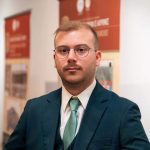 Ioakeim Delimitrou, UNESCO Youth Club of Thessaloniki,
Ioakeim Delimitrou is a Political Scientist, graduated from the Faculty of Political Science of Aristotle University of Thessaloniki. Currently, he is studying on the Master’s Degree of European Policies on Youth, Enterpreneurship, Education and Culture, of the University of Macedonia, at Thessaloniki, Greece He has shown great interest in participating in youth and civil society’s organizations. He is the Vice President of the Board and Project Manager of the UNESCO Youth Club of Thessaloniki, assisting at the implementation of several projects and at the coordination of the volunteers of the NGO. Previously, at this NGO, he performed a three months internship. Moreover, he is member of the Greek Branch of the Young European Federalists (YEF), serving, for a seconf term, as the Secretary General at the national Board, and as President of the Board at the local section of the YEF in Thessaloniki. Lastly, he has been one of the founding members of the Youth Council of the Municipality of Thermi, his hometown, serving for two years as the Secretary of the local Circle of the villages Kardia and Kato Sxolari of the Youth Council and as the Secretary of the General Assembly of the Youth Council. Moreover he is interested academically and scientifically in european politics and policies with a speciality on youth. As such he is member of the research team and coordinate committee of the “EUSYP Think Tank – Startegies and Policies on youth of the EU”
WORKSHOPS

Mrs. Susanne Kallanvaara, Teacher at Burgårdens gymnasium (Sweden)
She has graduated as upper secondary teacher at Göteborg University in Sweden in 1984 and has a vast experience of teaching all levels of Swedish for immigrants up to university level. Currently employed at Munkebäcksgymnasiet in Göteborg. Has been active in the Swedish Anna Lindh network from the very start and has taken part in more than ten international projects within the European Life-Long Learning programme. The previous project at Munkebäcksgymnasiet ”Different Faces of Europe” was awarded both a national and a European quality label in the etwinning portal. Another on-going Erasmus+ project at the same school is ”Fundamental Rights in European Education (F.R.E.E.) and leading role EuroMed project inluding 10 countries “Euromed: Education without borders”. She deals with open and innovative education, training and youth work embedded in the digital era.